
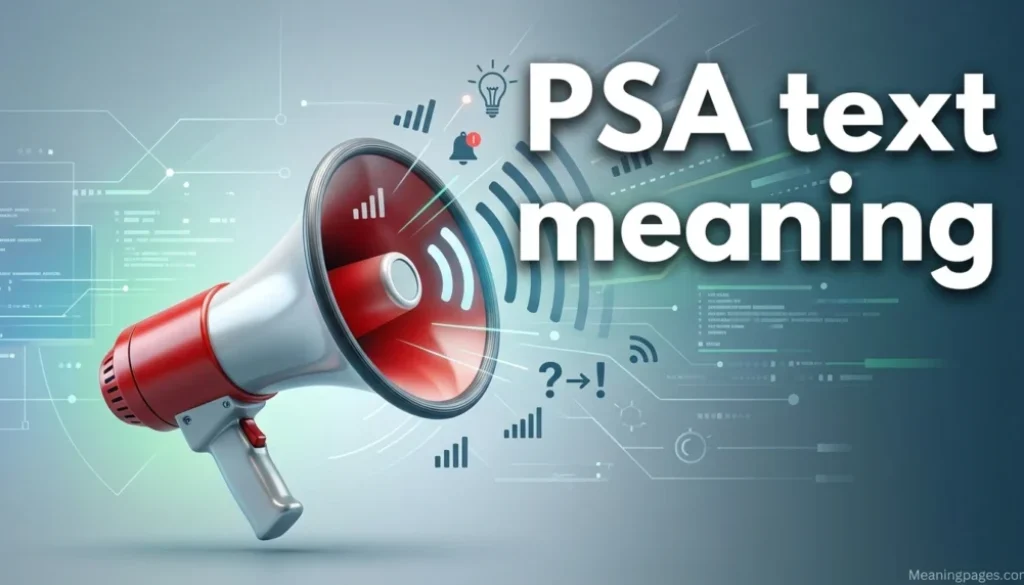
PSA text meaning
Have you ever opened a text message, Snapchat, or social media post and noticed someone write “PSA”? If so, you are not alone. Internet slang changes quickly, and many users feel confused when they encounter abbreviations they have never seen before. Whether you spotted it in a group chat, a TikTok caption, an Instagram story, or a WhatsApp message, understanding the meaning behind online abbreviations helps you communicate more effectively.
Many people search for this term because they want a quick answer before responding to a message. Fortunately, the meaning is simple and widely used across different platforms. In most cases, PSA serves as a way to grab attention and share important information with a group of people. However, the exact context can vary depending on where you see it.
This guide explains everything you need to know about psa text meaning, including how people use it online, examples in conversations, alternative expressions, common misunderstandings, and frequently asked questions.
What Does PSA Mean in Texting?
PSA stands for Public Service Announcement.
In texting slang and online messaging, people use PSA before sharing information they believe others should know. The phrase originally came from television and radio broadcasts where organizations delivered important announcements to the public.
Today, internet users have adapted the abbreviation for casual conversations. Instead of making a formal announcement, someone may simply write “PSA” to highlight useful information, a reminder, a warning, or an opinion they want everyone to notice.
For example:
- PSA: The meeting starts at 3 PM today.
- PSA: Don’t forget to update your passwords.
- PSA: The café closes earlier on weekends.
In each example, the sender wants to make sure people pay attention to the message.
PSA Meaning Across Different Platforms
Although the core meaning remains the same, the way people use PSA can differ across social media platforms and messaging apps.
Snapchat
On Snapchat, users often post a PSA in stories to share reminders, warnings, or personal opinions.
Examples:
- PSA: Stop sending streaks without messages.
- PSA: Drink more water today.
Since Snapchat content disappears quickly, users frequently use PSA to highlight information they want followers to see immediately.
TikTok
TikTok creators often include PSA in video captions.
Examples:
- PSA: This skincare product may not work for everyone.
- PSA: Always read ingredient labels before buying.
In many cases, TikTok users use PSA to educate viewers or share personal experiences.
Instagram users commonly add PSA to stories, reels, and captions.
Examples:
- PSA: New store hours start tomorrow.
- PSA: Be kind to customer service workers.
Because Instagram focuses heavily on engagement, PSA helps draw attention to important messages.
In WhatsApp groups, PSA often introduces announcements that affect multiple people.
Examples:
- PSA: The event location has changed.
- PSA: Please submit your reports before Friday.
As a result, group members immediately recognize that the information matters.
General Social Media
Across social media platforms, PSA functions as a social media acronym that signals urgency or importance.
Users often share:
- Safety reminders
- Helpful tips
- Public notices
- Community updates
- Personal recommendations
Therefore, the abbreviation remains popular in both personal and professional online communication.
Why Do People Use PSA in Online Messaging?
People use PSA because it saves time and captures attention quickly.
Instead of writing a long introduction, they can simply type “PSA” and move directly to the point.
Here are several reasons why users prefer it:
It Highlights Important Information
Readers instantly know the message deserves attention.
It Saves Space
Short abbreviations work well in texts, captions, and comments.
It Feels Familiar
Many internet users already understand the abbreviation, making communication faster.
It Works Across Platforms
Unlike some Gen Z slang terms that change frequently, PSA remains widely understood.
It Creates Emphasis
Adding PSA before a statement makes it feel more important and noticeable.
Consequently, the abbreviation continues to appear in millions of online conversations every day.
Texting Examples Using PSA
The best way to understand chat meaning is to see real-world examples.
Example 1: Friend Group Chat
Sarah: Anyone going to the concert tomorrow?
Jake: PSA: Parking near the venue is extremely limited.
Example 2: School Group
Emma: PSA: Assignment submissions close at midnight.
Example 3: Workplace Chat
Manager: PSA: Please complete cybersecurity training this week.
Example 4: Family Group
Mom: PSA: Dinner starts at 7 PM tonight.
Example 5: Social Media Caption
User: PSA: Sunscreen isn’t only for summer.
These examples show that PSA usually appears before useful information or reminders.
When Should You Use PSA?
Using PSA correctly can make your messages clearer and more effective.
Consider using it in the following situations.
Sharing Reminders
Examples:
- PSA: Tomorrow is the registration deadline.
- PSA: Don’t forget your appointment.
Providing Helpful Tips
Examples:
- PSA: Back up your files regularly.
- PSA: Read reviews before purchasing.
Giving Warnings
Examples:
- PSA: Watch out for phishing emails.
- PSA: Roads may be slippery after the storm.
Announcing Updates
Examples:
- PSA: The schedule has been updated.
- PSA: New rules take effect next week.
Informing a Group
Examples:
- PSA: The meeting room has changed.
- PSA: Lunch will be served at noon.
In these situations, PSA helps readers recognize that the information matters.
When You Should Not Use PSA
Although PSA is useful, it does not fit every conversation.
Avoid using it in these situations.
Casual One-on-One Chats
If you are sending a simple personal message, PSA may sound unnecessary.
Instead of:
- PSA: I’m running late.
You can simply say:
- I’m running late.
Serious Professional Documents
Formal reports, contracts, and official communications generally require complete wording rather than internet abbreviations.
Sensitive Discussions
When discussing emotional or serious topics, direct communication usually works better than slang.
Messages That Are Not Important
Overusing PSA can reduce its impact. If every message starts with PSA, people may stop paying attention.
Therefore, reserve it for information that genuinely deserves notice.
Alternative Meanings and Similar Slang Terms
Although Public Service Announcement is the most common meaning, users sometimes confuse PSA with other internet abbreviations.
Here are a few related terms.
FYI
Meaning: For Your Information
Example:
- FYI, the meeting starts earlier today.
FYI often sounds less urgent than PSA.
Heads Up
Meaning: Advance warning or notice
Example:
- Heads up, traffic is heavy this morning.
Reminder
Meaning: A notice to remember something
Example:
- Reminder: Submit your application today.
Note
Meaning: Important information
Example:
- Note: The store closes at 6 PM.
Announcement
Meaning: Official communication
Example:
- Announcement: New membership plans are available.
These alternatives can sometimes replace PSA depending on the situation.
Load more: OTW text meaning
Common Misunderstandings About PSA
Many users misunderstand this abbreviation when they first encounter it.
Let’s clear up some common confusion.
PSA Does Not Usually Mean a Private Message
Some beginners assume PSA refers to a direct message or personal conversation. In reality, it generally introduces information intended for multiple people.
PSA Is Not Exclusive to Social Media
While the term appears frequently on social platforms, people also use it in workplaces, schools, communities, and group chats.
PSA Is Not Always Serious
Traditional public service announcements often address important issues. However, online users frequently use PSA humorously.
Example:
- PSA: Pineapple absolutely belongs on pizza.
PSA Is Not New Gen Z Slang
Although younger users still use it, the abbreviation existed long before TikTok and modern social media trends.
Understanding these points helps prevent confusion during online conversations.
How PSA Fits Into Modern Internet Culture
Internet communication continues to evolve. New texting slang terms emerge regularly, while older abbreviations fade away. PSA remains popular because it fulfills a simple purpose: attracting attention.
On platforms filled with endless content, users need quick ways to signal importance. PSA does exactly that.
Additionally, content creators, influencers, brands, students, and professionals all recognize the abbreviation. Because of this broad recognition, it crosses different age groups and online communities.
Whether someone posts a Snapchat story, creates a TikTok video, shares Instagram chat terms, or sends a WhatsApp group update, PSA remains a reliable way to introduce important information.
Its simplicity, familiarity, and versatility explain why it continues to thrive in digital communication.
FAQs
What does PSA stand for in texting?
PSA stands for Public Service Announcement. People use it before sharing important information, reminders, tips, or warnings.
Is PSA considered texting slang?
Yes. While it originated in traditional media, it now functions as a common texting slang abbreviation in online messaging and social media conversations.
What does PSA mean on Snapchat?
On Snapchat, PSA usually introduces a reminder, opinion, warning, or announcement that the user wants followers to notice.
What does PSA mean on TikTok?
On TikTok, creators often use PSA in captions to share advice, information, or awareness messages.
Is PSA rude?
No. PSA is generally neutral and informative. However, using it excessively can sometimes make messages sound dramatic.
Can PSA be used in professional chats?
Yes. Team chats, workplace messaging apps, and group discussions often use PSA to highlight important updates.
Is PSA the same as FYI?
Not exactly. FYI means “For Your Information,” while PSA usually emphasizes information that deserves extra attention.
Do younger users still use PSA?
Yes. Despite the constant rise of new Gen Z slang, PSA remains widely understood and commonly used across social media platforms.
Conclusion
PSA is one of the most recognizable internet abbreviations used in modern digital communication. The term stands for Public Service Announcement and typically introduces important information, reminders, warnings, or helpful advice. Whether you encounter it on Snapchat, TikTok, Instagram, WhatsApp, or another platform, the meaning usually stays the same.
Understanding PSA helps you navigate online messaging with confidence. Moreover, knowing when to use it—and when not to use it—can make your communication clearer and more effective. The next time you see someone post “PSA,” you’ll immediately know they are trying to draw attention to information they consider important.

RD meaning in text slang - Meaning Pages
June 20, 2026 @ 10:15 am
[…] Related: PSA text meaning […]