
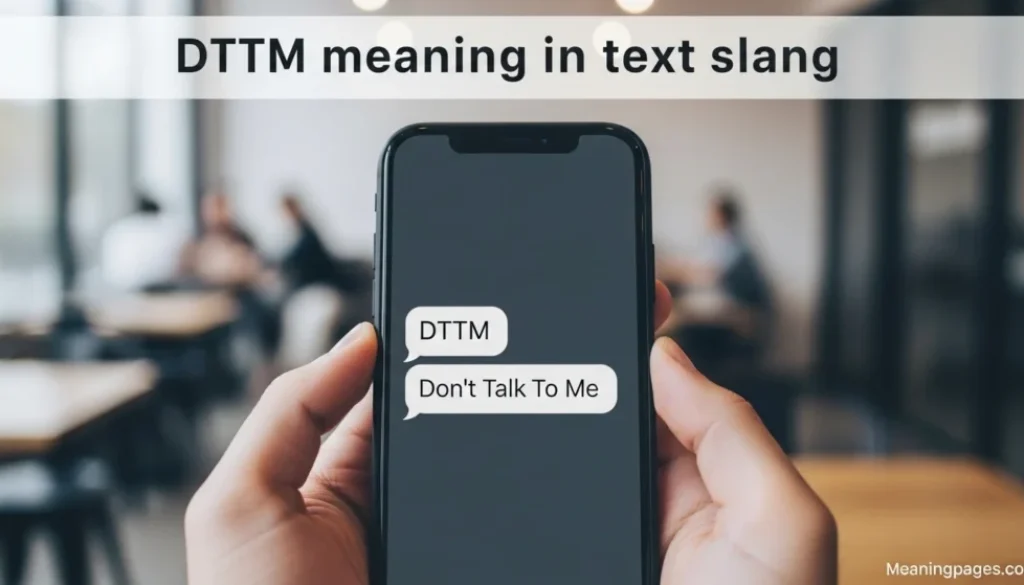
DTTM meaning in text slang
A text pops up on your phone, and someone writes “DTTM.” You pause for a second and wonder what it means. If that sounds familiar, you are not alone. Every day, people come across new texting shortcuts on social media, chat apps, gaming platforms, and messaging services. Some are easy to understand, while others can leave you confused.
That is why many people search for dttm meaning in text slang. They want a quick and simple answer without digging through complicated explanations. Text slang changes fast, and keeping up with it can be difficult. Whether you saw DTTM in a text message, on Snapchat, TikTok, Instagram, or another platform, understanding its meaning helps you avoid confusion and respond correctly.
In this guide, you’ll learn what DTTM means, how people use it, when it is appropriate, and examples that make it easy to understand.
Quick Answer: What Does DTTM Mean in Text Slang?
In text slang, DTTM usually means “Don’t Talk To Me.”
People use it when they are upset, annoyed, busy, frustrated, or simply do not want to have a conversation at that moment.
For example:
- “I had the worst day ever. DTTM.”
- “I’m so angry right now. DTTM.”
The phrase is often used casually between friends, but the tone depends on the situation.
Detailed Explanation of DTTM
DTTM is an abbreviation made from the first letters of the phrase:
- D = Don’t
- T = Talk
- T = To
- M = Me
Instead of typing the full sentence, people shorten it to DTTM to save time.
Texting culture is full of shortcuts. Just like people use LOL for “laugh out loud” or BRB for “be right back,” DTTM is another way to express a feeling quickly.
However, the meaning is not always serious. Sometimes people use it dramatically or jokingly after something minor happens.
For example:
- “My favorite team lost again. DTTM.”
- “I dropped my ice cream. DTTM.”
In these cases, the person may not actually want everyone to stop talking. They are simply expressing frustration in a playful way.
Where Is DTTM Commonly Used?
You may see DTTM in many online spaces.
Text Messages
Friends often use it during private conversations.
Example:
“I’m exhausted after work. DTTM for a while.”
Snapchat
Many users post DTTM in stories when they are feeling upset or want some space.
Example:
“Bad mood today. DTTM.”
Some people use it in captions or notes.
Example:
“Nothing is going right today. DTTM.”
TikTok
TikTok users sometimes add it to videos about frustrating situations.
Example:
“Me after failing my driving test: DTTM.”
Online Gaming
Gamers may use DTTM when they are angry after losing a match.
Example:
“We lost again. DTTM.”
Different Situations Where People Use DTTM
The meaning stays mostly the same, but the feeling behind it can change.
When Someone Is Angry
A person may use DTTM to show they need time to cool down.
Example:
“I can’t believe that happened. DTTM.”
When Someone Is Sad
People sometimes use it when they feel emotional and want to be alone.
Example:
“Feeling really down today. DTTM.”
When Someone Is Busy
Not every use is emotional. Sometimes people are simply occupied.
Example:
“Working on a project. DTTM until I’m done.”
When Someone Is Joking
Friends often use DTTM in a funny way.
Example:
“You ate the last slice of pizza? DTTM.”
Examples of DTTM in Conversations
Seeing the slang in real conversations makes it easier to understand.
Example 1
Friend 1: “How was your exam?”
Friend 2: “Terrible. DTTM.”
Here, Friend 2 is expressing frustration.
Example 2
Friend 1: “Want to hang out tonight?”
Friend 2: “Busy finishing homework. DTTM for a few hours.”
In this case, the person simply wants time to focus.
Example 3
Friend 1: “I accidentally spoiled the movie ending.”
Friend 2: “DTTM 😂”
The laughing emoji shows the person is joking.
Is DTTM Rude?
It can be, depending on how it is used.
If someone sends DTTM without any explanation, it might sound harsh.
For example:
- “DTTM.”
This can feel unfriendly.
A softer version could be:
- “I’m having a rough day. DTTM for a bit.”
- “Need some time alone. DTTM.”
Adding context makes the message sound more polite.
Common Mistakes When Using DTTM
Many people misunderstand or misuse this abbreviation.
Thinking It Is Always Serious
Not every DTTM message means someone is angry.
Sometimes it is simply a joke or dramatic reaction.
Using It With Strangers
DTTM works best with friends who understand your tone.
Sending it to someone you do not know well may come across as rude.
Ignoring Context
The meaning often depends on the conversation.
Look at the messages before and after it to understand the person’s mood.
Correct vs Incorrect Usage
Understanding proper usage helps avoid misunderstandings.
Correct Usage
- “I’m stressed right now. DTTM.”
- “Need some alone time. DTTM.”
- “You spoiled the ending? DTTM 😂”
These examples clearly show emotion or context.
Incorrect Usage
- “What is your favorite color? DTTM.”
- “Can you tell me the time? DTTM.”
These responses do not fit the conversation and may confuse people.
Similar Text Slang Terms
DTTM is not the only abbreviation people use to express emotions.
IDC
Means “I Don’t Care.”
Example:
“Watch whatever movie you want. IDC.”
IDK
Means “I Don’t Know.”
Example:
“IDK what happened.”
BRB
Means “Be Right Back.”
Example:
“BRB, someone is at the door.”
SMH
Means “Shaking My Head.”
Example:
“You forgot again? SMH.”
IMO
Means “In My Opinion.”
Example:
“IMO, that was the best episode.”
These abbreviations are common in online conversations and often appear alongside other slang terms.
Why Do People Use Text Slang Like DTTM?
Text slang makes communication faster.
Instead of typing a full sentence, people can express feelings with just a few letters.
Other reasons include:
- Saving time
- Keeping messages short
- Following online trends
- Adding humor to conversations
- Expressing emotions quickly
As texting and social media continue to grow, abbreviations like DTTM remain popular among many users.
Should You Use DTTM?
That depends on who you are talking to.
If your friends understand texting slang, DTTM can be a quick way to communicate your mood.
However, in professional settings, school assignments, business emails, or formal conversations, it is better to use complete sentences.
For example, instead of writing:
“DTTM.”
You could write:
“I need some time alone right now.”
This sounds more professional and clear.
How to Respond When Someone Says DTTM
If someone sends DTTM, respect their feelings and give them space.
You might respond with:
- “Okay, talk later.”
- “Take your time.”
- “I’m here if you need me.”
- “Hope things get better soon.”
A supportive response usually works best.
Related: DTM text meaning
Conclusion
Understanding dttm meaning in text slang is simple once you know the context. In most cases, DTTM stands for “Don’t Talk To Me.” People use it when they are upset, frustrated, busy, emotional, or sometimes just joking around with friends. Like many texting abbreviations, its meaning depends on the situation and the tone of the conversation.
When you see DTTM in a message, look at the surrounding context before reacting. It may be a serious request for space, or it could simply be a playful expression of frustration. Knowing how and when it is used will help you communicate more effectively in today’s fast-moving digital world.
FAQs
What does DTTM mean in texting?
DTTM usually means “Don’t Talk To Me.”
Is DTTM a negative slang term?
Not always. It can be serious, playful, or humorous depending on the situation.
Is DTTM popular on social media?
Yes. It is sometimes used on Snapchat, Instagram, TikTok, and in text messages.
Can DTTM be used jokingly?
Yes. Friends often use it as a funny reaction to small disappointments.
Is DTTM rude?
It can sound rude if used without context, but it is not always intended that way.
Should I use DTTM in professional communication?
No. Professional communication is usually clearer and more appropriate when written in full sentences.
How should I respond to DTTM?
A respectful response such as “Okay, take your time” or “I’m here if you need me” is usually the best choice.
DTTM meaning text - Meaning Pages
June 5, 2026 @ 6:35 am
[…] Related: DTTM meaning in text slang […]